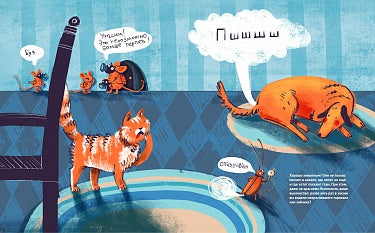
Gases are inside each of us! EVERYONE! There's absolutely nothing to be embarrassed about! Artist Alla Belova has created and illustrated a funny and highly informative book about what happens to gases inside each person. How Homer and Shakespeare wrote about farts, who flatulent people are, how animals, fish, and insects interact via gases, and much more—Alla Belova has drawn with a great sense of humor. And scientific editors have verified all the amazing and amusing facts ABOUT IT. A great way to transform farts from a taboo toilet topic into an opportunity to learn something new about the world and yourself!
REVIEWS FROM READERS AND CRITICS
This book should appeal to most children and infuriate many adults who like to judge by its cover and are too lazy to look at the table of contents. In scientific terms, it's about flatulence. Or, simply put, farting. And, in fact, its title speaks for itself: the book, with plenty of examples and a great sense of humor, explains that gases form in the stomach and intestines of absolutely every living creature—from an elephant to an ant.
An encyclopedia of gas formation and its causes, spiced with amusing popular science facts about farting. Some might blush and be horrified. But we all fart! The ancient Greeks weren't ashamed, but wrote poems about gas formation. Farting isn't just a natural process: herrings might even converse while passing gas. Overall, I recommend putting aside any unnecessary shame and immersing yourself in this beautiful book. Incidentally, at the end, there are dietary recommendations for farting less often.
And it's also great that it's a picture book. What's so great about an educational picture book? It prevents the author from spreading the word too thin, turning the text into a summary; it requires a rigorous selection of facts and their concise presentation. Therefore, "Everybody Does It" can be read aloud to a child (certainly from age six). And even a good reader can enjoy it alone. I won't deny myself the pleasure of repeating: the text is incredibly captivating! And the pictures, of course, are intended not only to aid comprehension but also to enhance the aesthetics of the material. It turns out that this is possible.