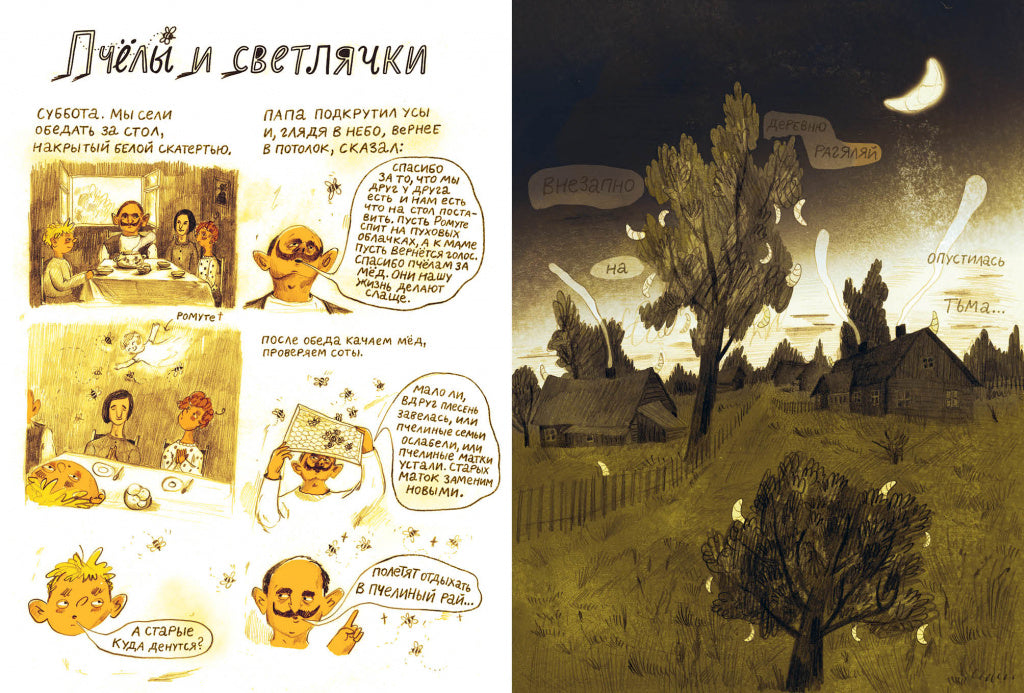
Siberian Haiku is a graphic novel about a deported Lithuanian family that reflects thousands of other family stories from the 20th century.
"I'm Algis, but they more often call me Algiukas. I've always dreamed of traveling. But it didn't quite turn out the way I imagined. At dawn on June 14, 1941, soldiers burst into our house and ordered us to pack for the journey. Leaving our native Lithuania, we had no idea that hard work, hunger, and vicious, biting parasites awaited us in a cold barracks—our new home in Siberia. What would our lives be like here? Dad taught us to notice the wonders of the world and support each other. And we try: we form the "Yabloki" choir, learn to play musical instruments, and even fall in love. And we never stop hoping to return home."
5 reasons to buy the book "Siberian Haiku":
- A comic is like a haiku – short but deep, touching but doesn’t speak directly;
- The topic of deportation, which is extremely little explored in Russian-language literature;
- Unique visual embodiment, in her work on the illustrations, Lina Itagaki used a lot of documentary photographs;
- The book is a winner of numerous awards and is included in the lists of the International Board on Books for Young People;
"One of the film's inspirations for the author was "Life is Beautiful." One of the main ideas was that beauty can be found even in sadness and horror.
About the history of the book's creation:
Yurga's father and grandmother, deported to Siberia, inspired the author to write this book. Yurga's father, who lived in the village of Kalmanka, a suburb of Barnaul, said he remembered almost nothing about his time in Siberia. One day, Yurga found her grandmother's notebook, a thin, small one. Her grandmother had written the entries after returning home, and they weren't as terrifying or sad as many other books about that time. Her diary was full of details, like notes about the beauty of nature and all sorts of little things we often overlook. And so Yurga realized she wanted to write a book. Much of it—though some of it is fictitious…
Quotes